Direct Flow 400 GPD RO System
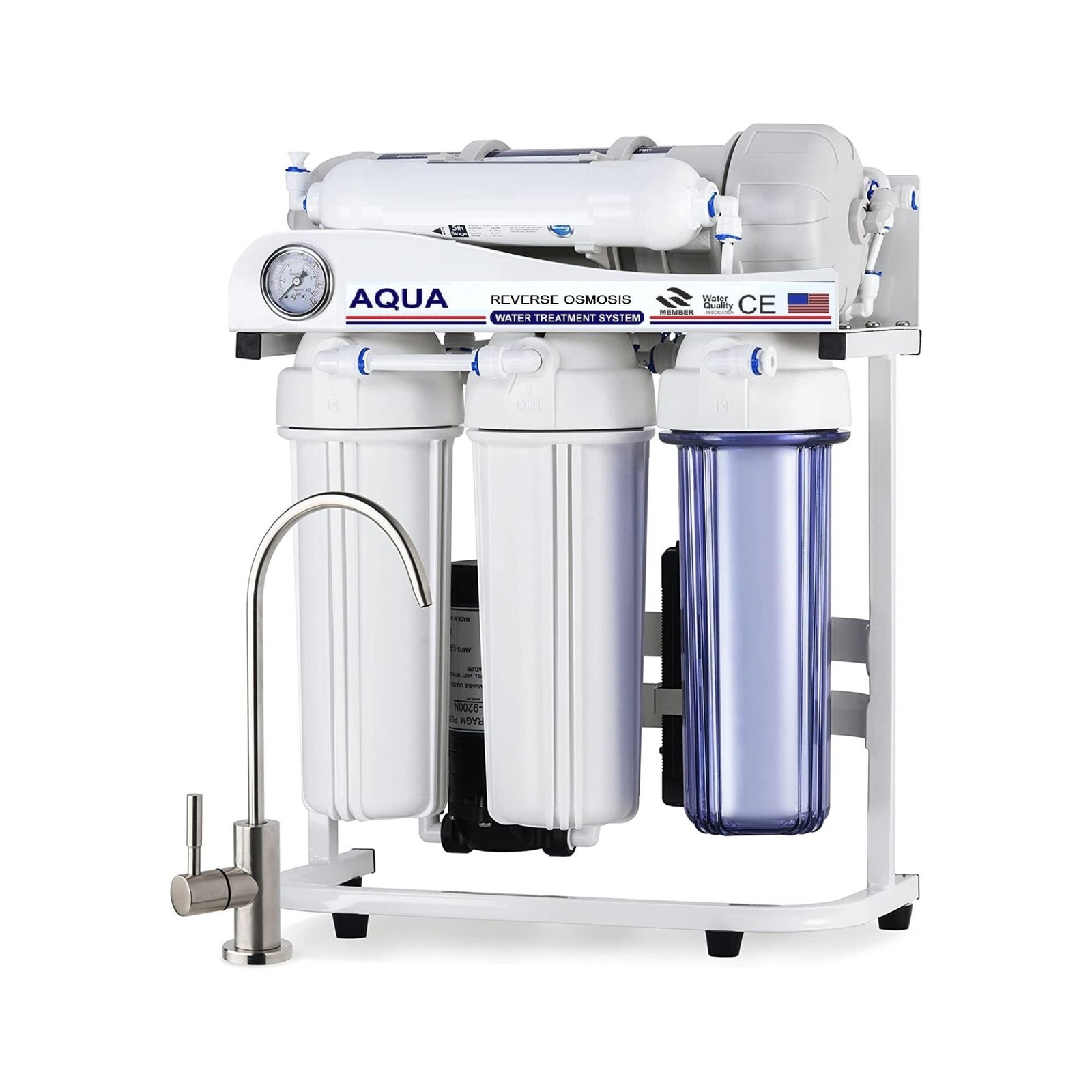
Direct Flow 400 GPD RO System is designed to produce 400 gallons of purified water per day without the need...
Starting from
AED 12
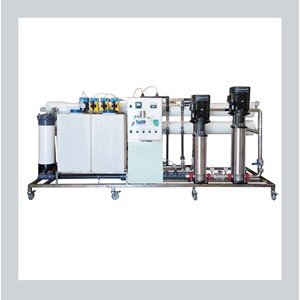
Explore the 30000 GPD Industrial RO System for high-capacity water purification using reverse osmosis technology in industrial facilities. settings.
Explore FilterPro water treatment solutions including water softeners, filtration systems, water purifiers, UV systems, commercial RO and industrial RO systems for homes, offices, commercial properties and industries in Dubai and across the UAE.
Direct Flow 400 GPD RO System is designed to produce 400 gallons of purified water per day without the need...
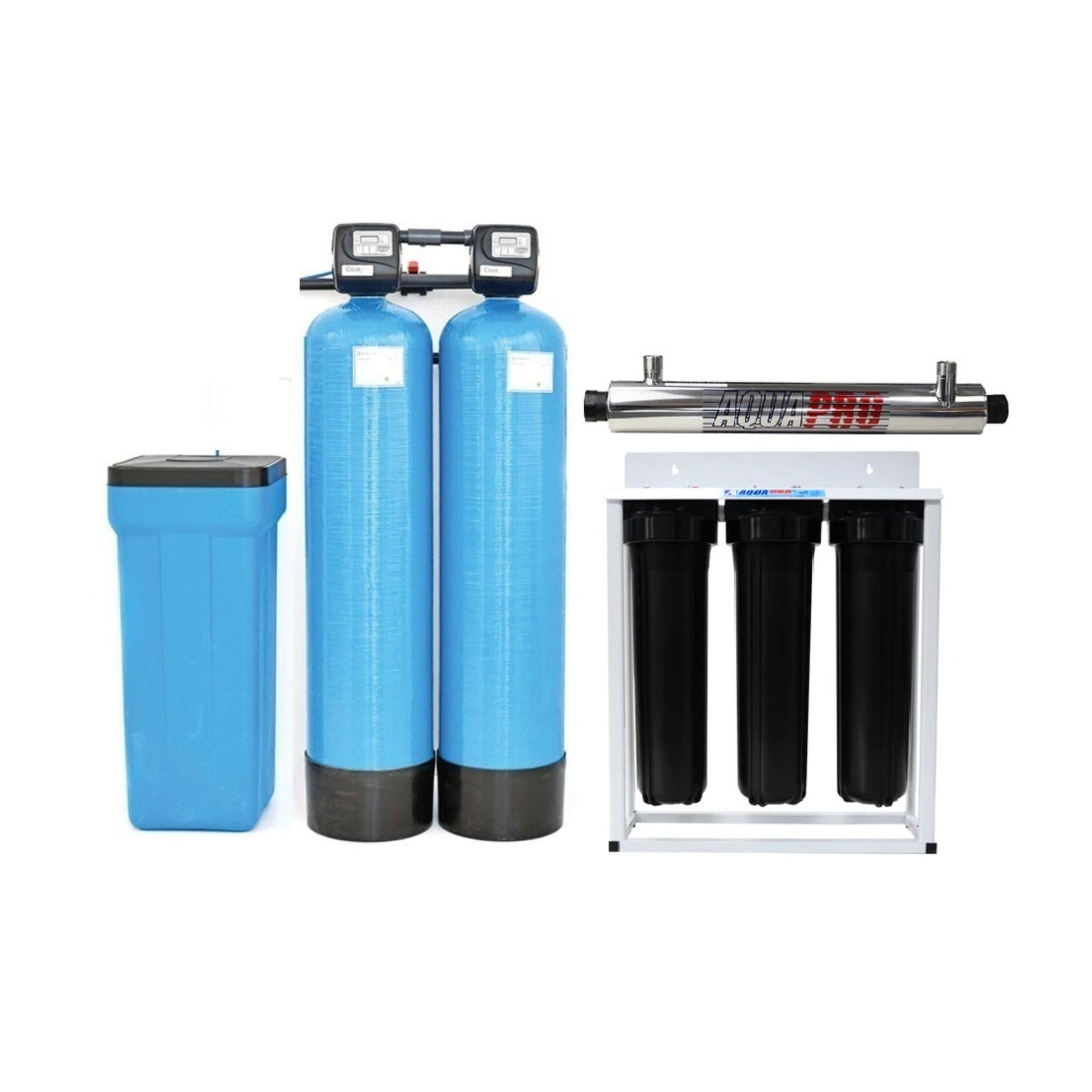
Water Softener, Media Filter with UV for effective hard water treatment, filtration, and UV disinfection. Ideal for homes, villas, commercial
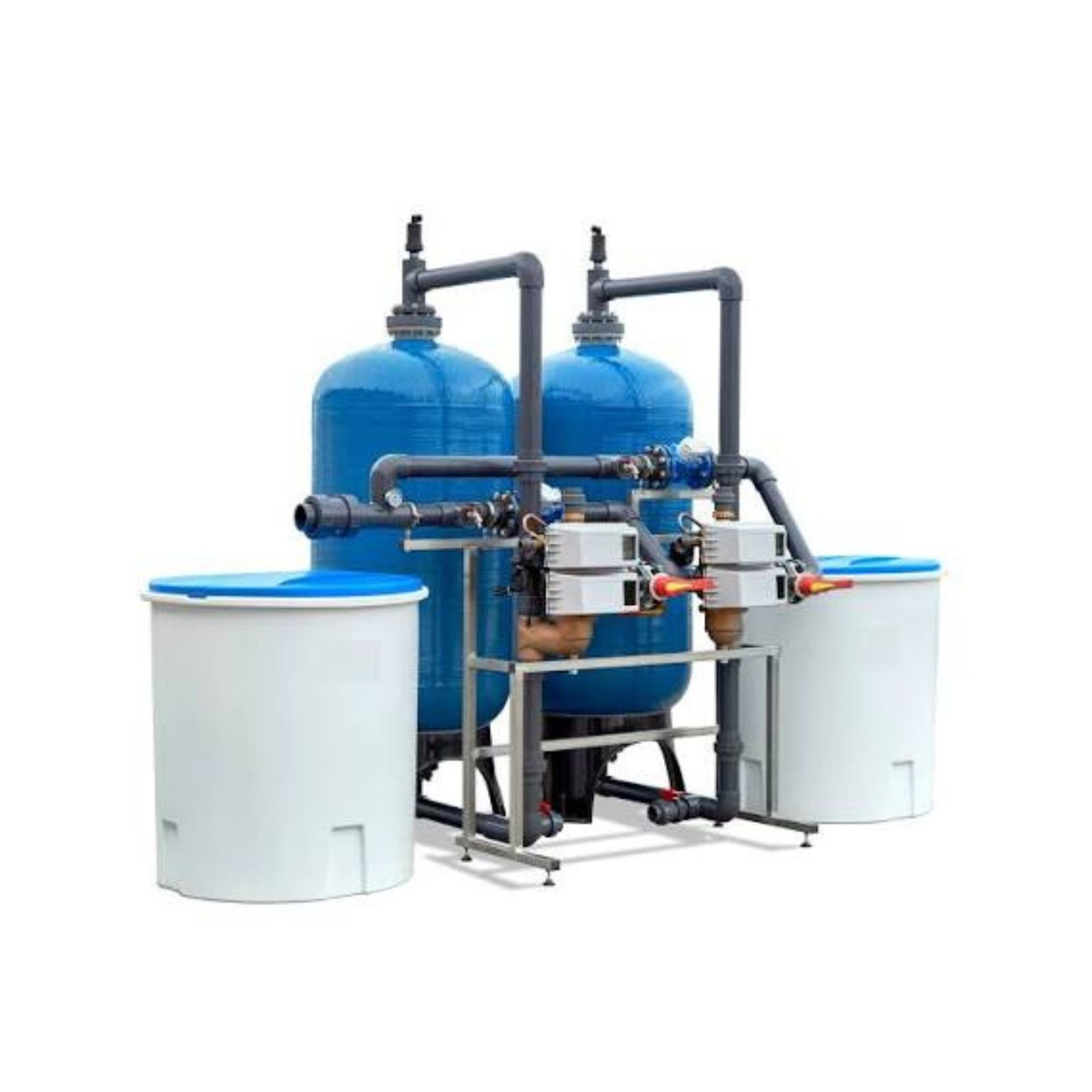
Commercial Water Softener in UAE | High-performance commercial water softener systems designed to reduce hard water, scale buildup
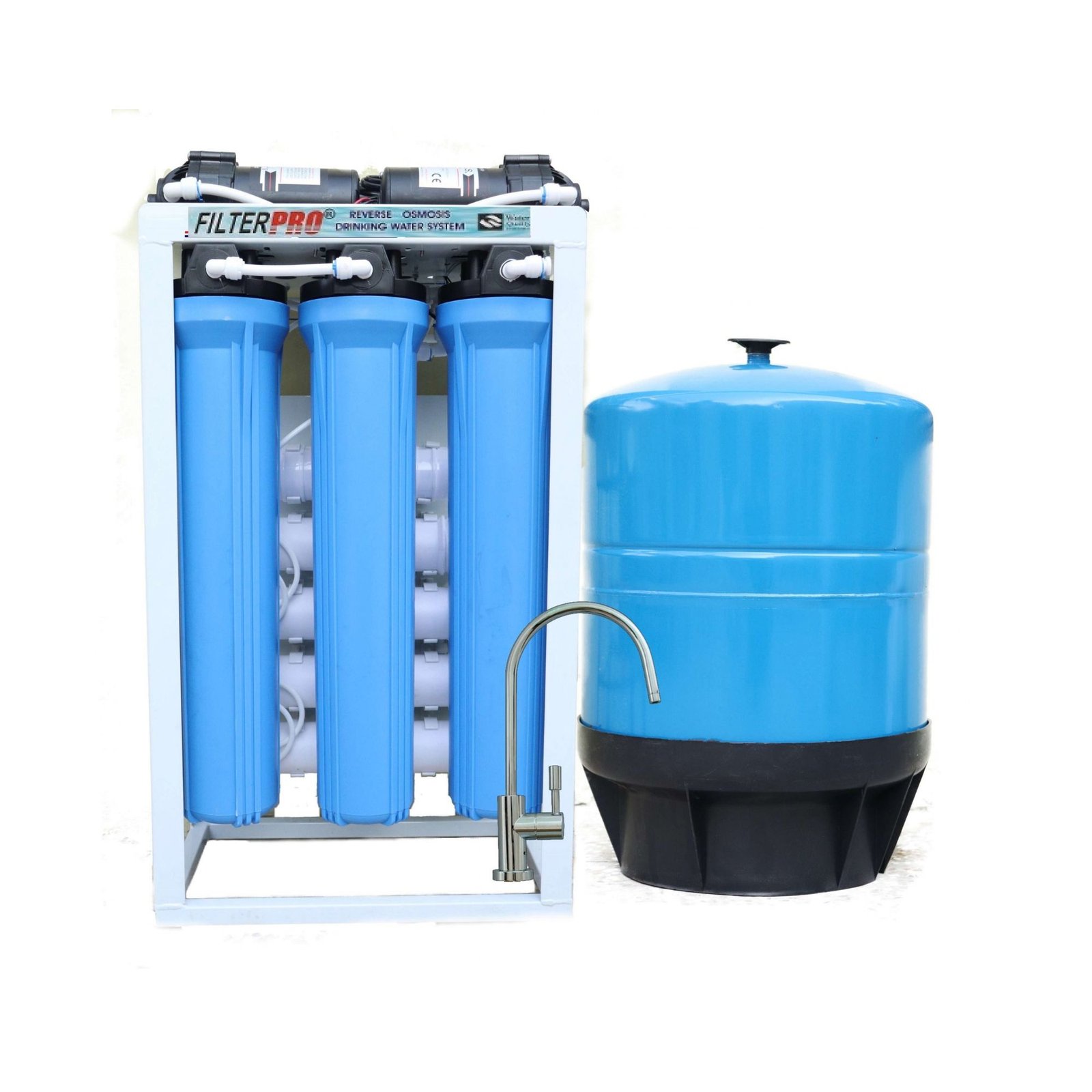
200 GPD RO is a 7-stage RO water purifier designed to provide multi-stage water filtration for homes, offices, and commercial applications.
The 30000 GPD Industrial RO System is a high-capacity reverse osmosis water treatment solution designed for industrial facilities, manufacturing plants, and large commercial operations that require a substantial supply of treated water. It uses pressure-driven membrane technology to reduce dissolved salts and other membrane-reducible substances from suitable feed water.
With a nominal production capacity of 30,000 US gallons per day, equivalent to approximately 113,562 litres or 113.6 cubic metres per day, this system can support a range of demanding water-treatment applications. Actual production depends on feed-water quality, temperature, operating pressure, membrane configuration, recovery rate, and the operating conditions specified by the system manufacturer.
FilterPro can help businesses in Dubai and across the UAE evaluate a 30000 GPD industrial RO solution based on source-water analysis, required product-water quality, daily demand, available utilities, and maintenance requirements. The final system design should be selected according to the needs of the application and verified technical specifications.
A 30000 GPD industrial reverse osmosis system is a water treatment plant designed around a nominal permeate capacity of 30,000 US gallons per day under specified conditions. The system typically combines membrane elements and pressure vessels with pumping equipment, pre-treatment filters, instruments, and operational controls.
Depending on the feed-water source and required output quality, the plant may include multimedia filtration, activated carbon treatment, water softening or antiscalant dosing, cartridge filtration, high-pressure pumping, and optional post-treatment equipment.
Industrial and commercial facilities may require large quantities of treated water for manufacturing, process operations, cleaning, equipment utilities, or other compatible uses. A correctly designed RO plant can provide a central treatment solution for these requirements.
System selection should consider feed-water chemistry, required permeate quality, operating hours, peak demand, recovery, energy consumption, concentrate disposal, and ongoing service needs—not just the nominal capacity rating.
Designed around a nominal capacity of 30,000 US gallons per day for suitable industrial and large commercial water-treatment applications.
Reverse osmosis technology helps reduce dissolved salts and other substances that can be separated by the selected membrane.
Pre-treatment, pumping, monitoring, automation, storage, and post-treatment can be configured according to source-water conditions and project requirements.
Feed water first passes through pre-treatment selected to match its chemical and physical characteristics. Cartridge filtration may then reduce remaining particles before water enters the membrane section. A high-pressure pump provides the pressure needed for reverse osmosis. The membranes produce a permeate stream and a concentrate stream, which must be managed according to the system design and site requirements. Optional post-treatment can be added when the application requires further conditioning.
| Stage | Function |
|---|---|
| Stage 1: Feed-Water Analysis | Identifies water-quality characteristics and helps establish suitable pre-treatment, membrane selection, and operating limits. |
| Stage 2: Pre-Treatment | Selected filters and conditioning equipment help manage suspended solids, chlorine, hardness, and scaling risks. |
| Stage 3: Cartridge Filtration | Provides a final particulate barrier before the feed water reaches the RO membrane section. |
| Stage 4: High-Pressure Pumping | Supplies the operating pressure required by the membrane configuration and feed-water conditions. |
| Stage 5: Reverse Osmosis Separation | Separates the incoming water into permeate and a concentrate stream containing a higher proportion of rejected dissolved substances. |
| Stage 6: Monitoring and Control | Instruments may monitor pressure, flow, conductivity, and other operating indicators to support plant management. |
| Stage 7: Optional Post-Treatment | Additional filtration, disinfection, mineral adjustment, or polishing can be added to meet the final application requirements. |
Can supply treated water for compatible production processes, equipment utilities, washing, and other industrial operations.
May support centralised water-treatment requirements for large hospitality sites, commercial properties, and other facilities with significant water demand.
Can be considered for compatible applications requiring reduced dissolved solids, provided the system meets the specified water-quality requirements.
| Component | Purpose |
|---|---|
| Pre-Treatment Filters | Help reduce suspended particles and manage feed-water conditions that could affect membrane performance. |
| Water Conditioning Equipment | May include a softener or chemical dosing equipment when water analysis identifies a need for additional scale control or conditioning. |
| Cartridge Filter Housing | Holds fine filtration cartridges that reduce remaining particles before membrane treatment. |
| High-Pressure Pump | Provides the pressure required for the reverse osmosis separation process. |
| RO Membrane Elements | Perform the primary separation process to reduce dissolved salts and other membrane-reducible substances. |
| Membrane Pressure Vessels | House the membrane elements and contain the pressure required during operation. |
| Flow Meters and Pressure Instruments | Help operators monitor flow and pressure at selected points in the treatment process. |
| Control Panel and Sensors | May manage start-up, shutdown, flushing, alarms, and protective functions depending on the selected control design. |
| Membrane Cleaning Connections | Provide access for approved membrane cleaning procedures; a dedicated clean-in-place unit may be optional. |
| Post-Treatment and Storage | Provide final water conditioning, storage, or distribution when required by the application. |
The following information is a general reference for a 30000 GPD industrial RO system, not a model-specific datasheet. Membrane quantity, pump rating, operating pressure, recovery, electrical supply, dimensions, and included equipment depend on the final engineering design. Confirm all specifications with the selected manufacturer's documentation.
| Product Type | Industrial Reverse Osmosis Water Treatment System |
|---|---|
| Nominal Permeate Capacity | 30,000 US gallons per day (GPD) under specified design and operating conditions |
| Approximate Daily Production | 113,562 litres per day, or approximately 113.6 cubic metres per day |
| Average Hourly Equivalent | Approximately 4,732 litres per hour when averaged over 24 hours; actual output depends on operating schedule and design conditions |
| Purification Technology | Pressure-driven reverse osmosis membrane separation |
| Feed-Water Source | Must be specified; municipal water, groundwater, brackish water, and seawater require different system designs |
| Membrane Configuration | Model-specific membrane type, element count, pressure-vessel arrangement, and staging |
| Pre-Treatment | Selected according to feed-water analysis and membrane protection requirements |
| Operating Pressure | Design-specific; depends on feed-water salinity, temperature, membrane selection, and production target |
| Recovery Rate | Project-specific; influenced by water chemistry, membrane arrangement, and scaling or fouling risks |
| Product-Water Quality | Depends on feed water, membrane performance, system configuration, and post-treatment; confirm against application requirements through testing |
| Control System | Manual or automated controls, depending on the selected configuration |
| Monitoring Equipment | May include pressure gauges, flow meters, conductivity or TDS monitoring, and operating alarms |
| Electrical Requirements | Confirm voltage, frequency, motor ratings, and electrical protection requirements from the manufacturer's datasheet |
| Installation Requirements | Suitable support or foundation, feed-water connections, drainage, power supply, service access, and product-water distribution |
| Maintenance | Periodic filter replacement, membrane monitoring, cleaning when required, and inspection of pumps, valves, and controls |
Industrial water requirements across Dubai and the UAE vary with the source water, operating environment, and intended application. A 30000 GPD RO system should be selected using representative water analysis and a clearly defined production target. Appropriate pre-treatment and membrane design are important when the feed water contains elevated dissolved salts, hardness, suspended particles, or other substances that may affect long-term performance.
For manufacturing facilities, hospitality projects, commercial developments, and process-water applications, FilterPro can help review capacity requirements, treatment configuration, site utilities, and maintenance planning. The complete design should also address treated-water storage and distribution, reject-water management, energy demand, and any additional treatment required to meet the intended water-quality standard.
Get support in evaluating daily water demand, source-water characteristics, target water quality, and site operating conditions.
Review system design choices such as pre-treatment, membrane arrangement, pumping, monitoring, automation, and post-treatment.
Plan filter servicing, membrane monitoring, cleaning, and routine inspections to help maintain dependable system operation.
Contact FilterPro to discuss your feed-water analysis, daily production target, treated-water quality requirements, and installation needs. Explore a suitable industrial reverse osmosis solution for your project in Dubai and across the UAE.
Contact FilterPro